
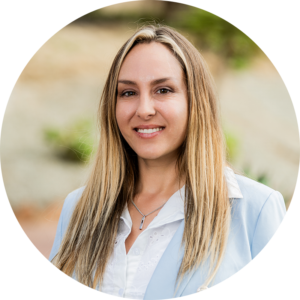
Co-Founder & Owner, Baja Rehab
My name is Jessica Shrader. I am a woman in long-term recovery, a co-founder and owner of Baja Rehab, and—long before I had any of those titles—I was an alcoholic and addict who could not figure out how to stay sober.
Alcohol was my solution almost from the moment I discovered it.
It quieted something inside of me that I didn’t know how to quiet on my own. Suddenly I wasn’t nervous, awkward, afraid, insecure or panicked. I felt confident. I felt prettier, funnier, braver and more interesting. I felt like I belonged.
And for a while, alcohol and drugs seemed to give me everything I thought I was missing.
I was already outgoing, rebellious, creative, adventurous and strong-willed. Under the influence, those qualities became extreme. By 17, I was dealing drugs. I was attracted to danger, excitement, chaos and people who lived the same way. I became comfortable being the black sheep. In fact, I eventually wore it like a badge of honor.
Chaos became familiar to me.
If I wasn’t having fun, I was creating drama. If I wasn’t creating drama, I was chasing love. If I wasn’t chasing love, I was escaping into something else.
Alcohol. Drugs. Men. Relationships. Attention. Excitement. Anything that could change the way I felt.
I didn’t understand it then, but I had spent most of my life learning how to escape myself.
And eventually, all of those escapes stopped working.
When the Solution Became the Problem
Addiction did not destroy my life overnight.
It happened progressively.
There were hospitals. Jails. Detoxes. Treatment centers. Broken relationships. Humiliation.
Withdrawal. Regret. Promises to myself and promises to everyone around me.
I cannot tell you how many times I said, This is it. I’m done.
And I meant it every single time.
I would get physically well enough to believe I had learned my lesson. I would put some time together. I would make resolutions. I would convince myself that this time would be different.
Eventually, the obsession always returned.
My life became so unmanageable that I actually began planning around the fact that I knew I would eventually fall apart again. Jobs, relationships and responsibilities had to accommodate my addiction because somewhere inside of me, I knew another run was coming.
My best was always partial.
My excuses were endless.
My addiction eventually took me to places where my family was forced to confront a devastating reality: I was a danger to myself and, at times, to other people.
I could not stay away from drugs and alcohol long enough to save my own life.
And removing the substances wasn’t enough, either.
Left to my own devices, I could find another escape. Another relationship. Another obsession.
Another distraction. Another way not to sit still long enough to face myself.
That is part of why I ultimately ended up in a lockdown treatment facility in Mexico.
At the time, “lockdown” didn’t sound like freedom. it sounded like Jail.
Today, I understand that it helped give me exactly what I could not give myself:
Time. Separation. Accountability. Structure. Consequences. And nowhere left to run.
I couldn’t manipulate my environment to make myself comfortable. I couldn’t simply walk out when my emotions became unbearable. I couldn’t reach for every familiar person, substance or distraction that I had always used to regulate myself.
Eventually, I had to meet Jessica.
Choosing Life
There was a point in my addiction when my mother asked me how I wanted to be buried.
I was only in my early thirties.
Imagine what addiction has to look like for a mother to ask her living daughter that question.
I remember lying in filthy motel rooms, so sick that I could barely continue drinking and yet too physically dependent to simply stop. Ambulances came for me on many occasions. My body hurt. My mind hurt. My life had become incredibly small.
All the things I once thought mattered—appearance, relationships, possessions, pride, being right—had to disappear in order to get better. There is only survival.
Somewhere inside that nightmare, I made a decision.
I wanted to live.
That decision didn’t magically fix me.
It was simply the beginning.
I also began confronting God.
Not because I suddenly understood everything spiritually, but because eventually I had exhausted my own ideas.
And that became one of the greatest gifts of my life. Finally getting sober!
Recovery Had to Become Bigger Than Sobriety
My recovery has not been a straight line.
There were years of struggle, growth, painful lessons and moments when I discovered that abstinence alone was not enough.
Something happened to me during a period in my life that changed me and the person I was becoming.
Instead of reaching or relying on another relationship to fill the emptiness, I plummeted toward the 12 Steps.
I went after recovery differently than I ever had before.
I put action behind it.
I worked the Steps. I leaned into my sponsor. I worked with other women, I sponsored other women. I practiced honesty when honesty was uncomfortable. I learned accountability. I prayed.
I served. I showed up.
And instead of rebuilding myself around a sexual relationship, I rebuilt myself around God, recovery, purpose and work.
For perhaps the first time in my life, there wasn’t a man waiting at the center of my transformation.
The sweat equity I was putting into Baja Rehab along the way, and the clients and families depending on us throughout the process was a huge part of that transformation.
There were problems that needed solving, employees who needed leadership, frightened parents who needed someone to answer the phone, and people exactly like I had once been who needed somebody to believe that there was still a human being underneath all that chaos.
I stopped asking life to make me feel fulfilled and started asking myself what I could contribute to it.
That changed everything.
Why Baja Rehab Exists
Baja Rehab was not created from a textbook.
It was born from lived experience.
Had I never been sent to lockdown treatment in Mexico, Baja Rehab as it exists today probably would never have existed.
I saw something valuable in the Mexican treatment model that was often missing from American treatment: the ability to create real separation from the environment and behaviors that continually fed addiction.
But I also saw things I wanted to do differently.
I wanted clinical care. Ethics. Dignity. Medical oversight. Psychology. Family involvement.
Comfort. Activities. Human connection. Fun. Individual attention. And respect for the fact that the person being treated is still a human being with rights, a personality and a future.
At the same time, I didn’t want to lose the structure, accountability, behavioral modification and protection that had helped save my own life.
So I took ideas from American treatment and Mexican treatment and began building something of our own.
My co-owner and I—two American addicts in recovery decided to plant a U.S. flag in Mexico and build the kind of program we believed people like us actually needed.
It was bold.
It was risky.
At times it was probably a little crazy.
And it was one of the best decisions I have ever made.
Sometimes Love Has to Be Strong Enough to Say No
One of the greatest misconceptions about addiction treatment is that helping someone always means making them comfortable.
My own life taught me differently.
Sometimes a person is simply too sick to make decisions from a healthy mind.
I know that because I was that person.
There were times when I would have walked straight out of the very place that was keeping me alive had someone simply opened the door.
I would have told you I knew what was best for me.
I didn’t.
That experience profoundly shaped my philosophy about treatment.
I believe in compassion, but I also believe in accountability.
I believe in dignity, but I also believe in consequences.
I believe in excellent clinical care, but I also believe that recovery requires behavioral change.
And I believe there are moments when loving an addict means refusing to participate in the decisions that are killing them.
Baja Rehab was built around that balance.
Hundreds of Stories Later
Over the years, Baja Rehab has treated hundreds of people.
I couldn’t possibly count all the conversations, interventions, late-night phone calls, terrified parents, difficult admissions, interventions, breakthroughs, graduations, relapses, reunions and second chances that have passed through our doors.
Some people arrived furious.
Some arrived terrified.
Some came willingly.
Some absolutely did not want to be there.
Many came to us after their families had run out of ideas.
And over the years, I have had the extraordinary privilege of watching people who once seemed unreachable become sons and daughters again. Mothers and fathers. Employees. Sponsors.
Friends. Productive members of society.
People have gotten married.
People have rebuilt families.
People have found God.
People have found themselves.
And many have stayed sober and lived to tell their own story—with Baja Rehab serving as the foundation or an important chapter in their journey.
Not everyone succeeds. No ethical treatment center can promise that.
But every human being who comes through our doors deserves the opportunity to discover that another life is possible.
I Am Still an Addict in Recovery
Being an owner of a treatment center does not graduate me from addiction.
Years of sobriety don’t mean I no longer need recovery.
Success doesn’t exempt me from doing the work.
If anything, the life I have today gives me more reason to protect it.
Recovery, to me, is action.
It is sponsorship.
It is the 12 Steps.
It is service.
It is honesty when lying would be easier.
It is accountability when blaming somebody else would feel better.
It is making amends through changed behavior.
It is learning to sit with feelings instead of immediately trying to escape them.
It is showing up when nobody is applauding.
It is accepting that sometimes I am wrong.
It is continuing to grow.
And it is remembering exactly where I came from.
I never want to become so polished that I forget the woman lying sick in that motel room.
Because she is the reason I understand the person on the other side of our gate.
To the Person Reading This
If you are struggling with addiction, I understand why you may believe nobody understands you.
I understand why you think your circumstances are different.
I understand why you’re convinced you can figure it out tomorrow.
I understand the fear of surrendering your phone, your relationships, your substances, your independence, your routines and every other thing you use to make yourself feel okay.
I understand because I fought for those same things.
And they almost killed me.
If you’re a parent, spouse, sibling or friend reading this because somebody you love is disappearing in front of you, I understand you too.
You may be exhausted.
You may be angry.
You may be scared to death.
You may have tried loving them, reasoning with them, threatening them, rescuing them, paying for them, cutting them off, taking them back and trying one more time.
There comes a point when something has to be different.
That is what I ask of the people who come to Baja Rehab:
Try something different.
For once, consider the possibility that the ideas that brought you here may not be the ideas that will get you out.
Give recovery your whole heart.
Give it time.
Allow yourself to be uncomfortable.
Allow someone to tell you the truth.
Allow consequences to teach you something.
Allow God into places you thought were beyond repair.
And put action behind your desire to live.
I once believed freedom meant being able to do whatever I wanted.
Recovery taught me something completely different.
Freedom is no longer having to do the things I once couldn’t stop doing.
Today, I have a life I could not have imagined from that motel room.
I have years of sobriety.
I have purpose.
I have a business I have fought for with everything in me.
I have been given the privilege of helping other addicts and their families.
And I have watched something that began from two addicts’ desperate determination to stay sober grow into a place that has touched hundreds of lives.
Baja Rehab is not simply a business to me.
It is sweat equity. It is purpose. It is part of my recovery. And it is one of the greatest amends I will ever make with my life.
If my worst days had never happened, Baja Rehab might never have happened either.
I wouldn’t choose to relive those years.
But today, I refuse to waste them.
If you’re reading this from somewhere that feels hopeless, I want you to know something:
Your worst chapter does not have to be your last one.
Mine wasn’t.
— Jessica Shrader
Co-Founder & Owner, Baja Rehab
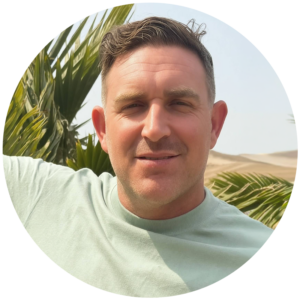
Co-Founder, Baja Rehab
My name is Adam Lincoln, and I’m a San Diego native.
I was raised in a middle-class home by my mother and father. There was nothing about my childhood that should have predicted where addiction would eventually take me.
By the time I was 14, I was smoking weed and had started drinking. At first, neither seemed like a problem. In fact, they felt like a solution.
Alcohol and drugs quieted my social anxiety. They made it easier to connect with people and helped take away that restless feeling that life was somehow boring or not enough. I had this strange belief that everything in my life would eventually just fall into place.
I graduated high school and began experimenting with harder drugs, including cocaine and ecstasy. And if I’m telling the truth, in the beginning, I had a lot of fun.
There were dangerous situations and warning signs, but somehow I kept coming out of them relatively unharmed. Every time I escaped a consequence, it reinforced the idea that maybe I really didn’t have a problem.
After high school, I attended two junior colleges in Orange County so I could stay close to my high school sweetheart. Around that time, I tried methamphetamine for the first time.
Within about eight months, my life looked completely different.
I was living near the harbor area of Los Angeles. I had a new group of friends, my relationship had ended, and I was using meth regularly. The paranoia was unreal. My house was filthy.
Every piece of clothing I owned seemed to end up on the floor. The sink was constantly full of dirty dishes. I stopped caring about my hygiene. I barely slept.
Eventually, I received an eviction notice.
So I did what any grown man does when his life is completely falling apart.
I called my mother.
Because I had been lying and living far enough away from my family, they had no idea how bad things had become. I had managed to keep my addiction at a distance and hide the reality of how I was living.
This time, I told my mom the truth.
I asked for help.
She sent a moving truck to Los Angeles. I packed up what was left of my life and entered my first detox at Sharp Mesa Vista Hospital when I was only 20 years old.
I stayed for about eight days. I slept through most of it. When I finally woke up, after eating and sleeping and beginning to feel human again, I made myself a promise:
I will never drink or use drugs again.
And I meant it.
That’s an important part of my story because I would make that exact same promise many more times.
Over the next six years, I went from program to program and county jail to county jail.
Sometimes I entered treatment voluntarily. Other times I was forced into it. But every single time, I went in believing the same thing:
I’m done. This time, I’m never using again.
I wasn’t lying.
I meant it from the deepest part of me.
And yet, eventually, I would use again.
That became one of the most baffling things about addiction for me. I understood physical dependence. I understood that once I started using, I would usually use again the next day, and the next, until something or someone forcibly stopped me.
What I didn’t understand was what happened before the first drink or drug.
I eventually realized that my relapses didn’t begin when I was intoxicated.
They began when I was completely sober.
Stone-cold sober, knowing exactly what drugs and alcohol had already cost me, I would somehow make the decision to pick them up again.
That was the insanity I couldn’t understand.
My life began to change when I stopped trying to solve the problem entirely with the same mind that kept leading me back into it.
I started working with a sponsor. I surrounded myself with people who understood addiction because they had lived it themselves. Eventually, I took a job at a rehabilitation center I had once attended.
For the first time, I felt like I was around my people.
For most of my life, I had felt like the screwup. The black sheep. The person who couldn’t seem to get it together.
Recovery taught me to see myself differently.
I wasn’t a bad person trying to become good.
I was a sick person learning how to get well.
One of the most important things my sponsor ever told me was:
“You can’t fix a broken brain with a broken brain. Let us think for you for a little while.”
That idea has stayed with me throughout my recovery and eventually became part of the
philosophy behind Baja Rehab.
When someone is deep in addiction, there are times when love means refusing to allow the
disease to continue making every decision.
Sometimes a person needs to be protected from themselves long enough for their mind to clear.
Long enough to sleep.
Long enough to heal.
Long enough to experience consequences without immediately escaping them.
Long enough to build relationships.
Long enough to work through anger, fear, resentment and trauma.
Long enough to experience life sober.
And most importantly, long enough to actually see what their life can become.
I wish a place like Baja Rehab had existed when I was trying to get sober.
I wish someone could have taken me somewhere safe and told me, You’re staying here. We’re going to love you through this. We’re going to hold you accountable. And we’re not going to let you run away from recovery the moment it becomes uncomfortable.
Because uncomfortable didn’t mean treatment wasn’t working.
For me, uncomfortable was often exactly where the work needed to begin.
That is why I believe so strongly in long-term, highly structured treatment.
It isn’t about punishment.
It isn’t about controlling someone.
It’s about time.
Time away from the drug.
Time away from the chaos.
Time away from the people, places and circumstances that keep feeding the addiction.
Time for the brain to heal and for a person to become capable of making decisions from a completely different state of mind.
Today, my life looks nothing like the life of that 20-year-old kid calling his mother from a filthy apartment in Los Angeles.
I have been sober for many years. I am happily married. I am a father to a beautiful baby boy.
And through Baja Rehab, I have had the privilege of watching families reunite and people who once seemed completely hopeless rebuild their lives.
I don’t take any of it for granted.
Working in addiction treatment also keeps me accountable to my own recovery. Every person who comes through our doors reminds me where I came from and what can happen when someone is given enough time, structure, accountability, love and support to truly change.
I’ve watched people arrive angry, terrified, resistant and absolutely convinced they don’t belong here.
Then something happens.
Days become weeks.
Weeks become months.
Their eyes become clearer. Their relationships begin to heal. Their confidence comes back.
Their families start recognizing them again.
Eventually, many of them begin recognizing themselves again.
Those are the changes that are difficult to explain until you’ve witnessed them.
I believe in Baja Rehab because I believe in what can happen when we stop asking someone in active addiction to make perfect decisions with a mind that is currently incapable of making them.
Sometimes we have to think for you for a little while.
Sometimes we have to keep you safe long enough for you to discover that the life you were so desperately trying to escape is capable of becoming a life you don’t want to lose.
Drugs and alcohol aren’t going anywhere.
They’ll always be there.
But life is short, and the opportunity to recover won’t always be.
If you’re reading this because you love someone who cannot seem to stop—or because you’re that person yourself—I understand.
I’ve been there.
And I also know what can happen next.
Adam Lincoln
Co-Founder
Baja Rehab